
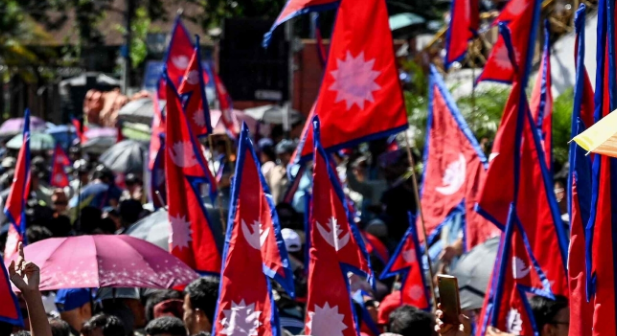
The political crisis in Nepal has captured attention far beyond Kathmandu, becoming a significant topic for South Asian stability and global diplomatic observers alike. What began as protests by young citizens has expanded into a broader challenge involving governance, foreign influence, and regional security concerns.
1. Unprecedented Youth-Led Uprising
In September 2025, large-scale demonstrations erupted across Nepal, led mainly by Generation Z in response to a government ban on 26 major social media platforms — including Facebook, WhatsApp, Instagram and X — which young Nepalis viewed as an attack on free speech and modern communication channels.
The Times of India
The protests quickly grew from digital activism to mass street demonstrations against corruption, lack of transparency, unemployment, and perceived elite privileges.
2. Government Collapse and Violence
The unrest escalated into violence when security forces clashed with protesters. Hundreds were injured and dozens killed during mass protests, and demonstrators even stormed and set parts of the Federal Parliament building on fire.
Amid mounting pressure, Prime Minister K. P. Sharma Oli resigned, and an interim government was appointed, with new elections expected.
3. Impact on Regional Stability
Nepal’s instability matters for South Asia, one of the most densely populated and geopolitically sensitive regions in the world. The country borders two major powers — India and China — and shares open borders with India.
The political turmoil raises concerns about:
Cross-border security risks, including illegal trafficking or extremist exploitation of unrest.
Influence from external powers seeking strategic leverage in the Himalayan region. Analysts warn that both China and India are closely watching developments to protect their interests.
Potential rise in anti-India sentiment among parts of the Nepali public, which Indian agencies are monitoring to avoid spillover effects into Indian states bordering Nepal.
4. Economic and Social Consequences
Nepal’s economy is heavily dependent on remittances, foreign labour markets, and tourism. Political uncertainty threatens investor confidence and disrupts growth prospects, which could have ripple effects on emerging markets across South Asia.
Youth unemployment, corruption, and economic inequality — central grievances behind the crisis — reflect broader regional developmental challenges.
5. Geopolitical Attention
Because Nepal sits between India and China, its internal politics attract global strategic interest. Both powers have interests in infrastructure projects, trade routes, and regional influence — making Nepal a focal point for competition in South Asia.
International media and analysts have highlighted Nepal’s crisis as a test of how young populations, digital culture, and governance issues interact in a globalized political landscape